
META: THE UNBREAKABLE EMPIRE
How Meta turned crises into strategic assets—and why 17.5 million stolen records are just the latest episode in a much bigger story
It’s Tuesday morning, January 7, 2026. While millions of Europeans scroll Instagram during a coffee break, a file is circulating in the underground corridors of the dark web containing their personal data: emails, phone numbers, addresses. Seventeen and a half million profiles, packaged in JSON, ready to be used by anyone who wants to launch industrial-scale phishing campaigns. The price? Zero. The hacker who posted it—hiding behind the alias “Solonik”—released it for free on BreachForums.
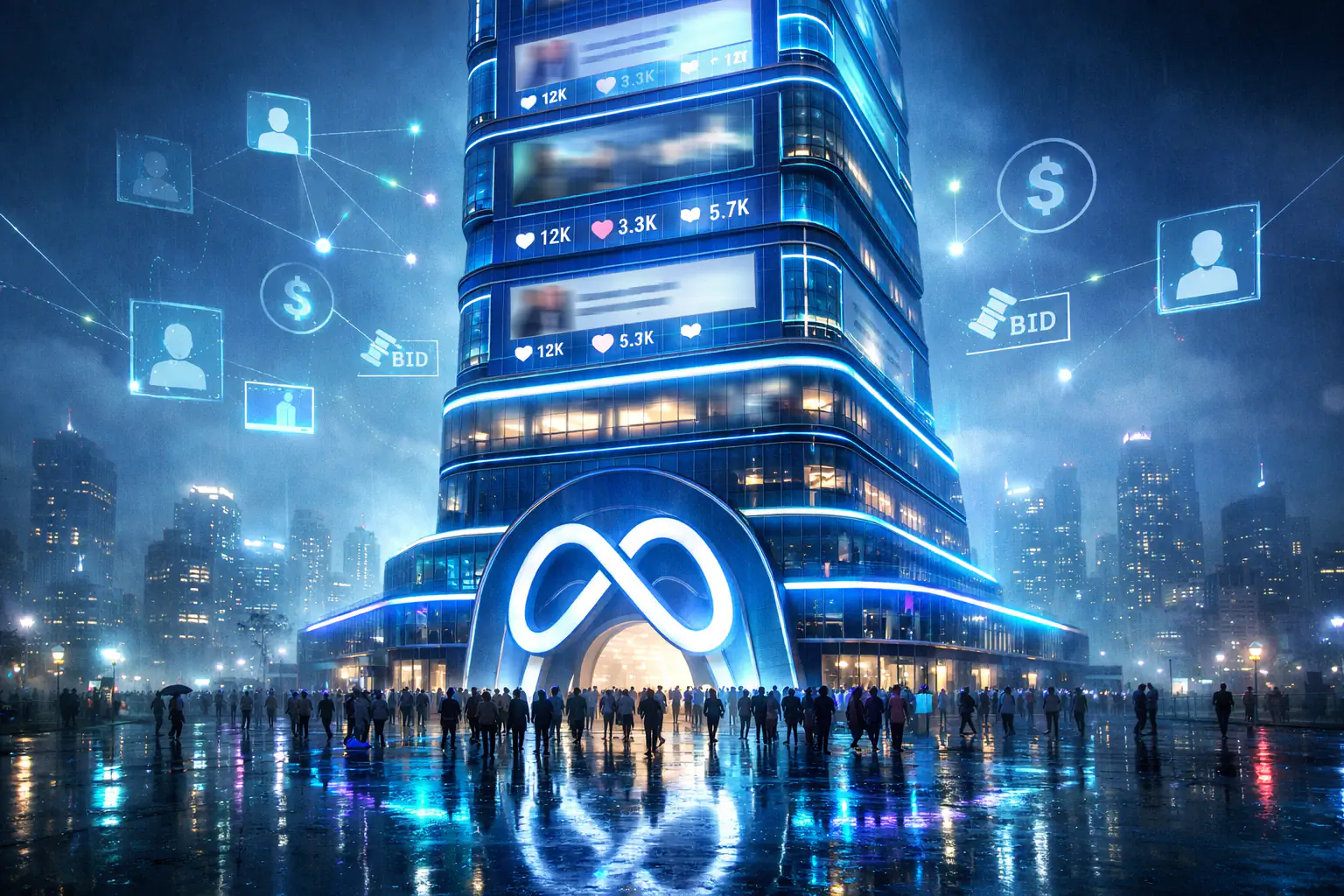
The next day, January 8, the emails start arriving. Millions of users receive Instagram password reset notifications. Not phishing: authentic communications sent from Meta’s official servers. The platform’s security systems—under pressure from massive automated requests—lose the ability to distinguish legitimate resets from coordinated attacks. Rate limiting—the mechanism designed to block abnormal requests—collapses.
Three days later, on January 11, Meta’s official response arrives. There was no breach of our systems, the company says. Accounts are secure. It was only a bug that allowed external password reset requests. You can ignore those emails.
Two weeks later, what should have been a devastating reputational shock changes nothing. Market cap hovers around $1.6 trillion. Daily active users keep growing. The stock stays stable.
This is not the story of a data breach. This is the story of a digital empire that developed structural immunity to scandal. An empire where crises become line items, billion-dollar fines become predictable operating costs, and leaks involving millions of personal records become temporary PR turbulence. Welcome to the era of the unpierceable platform-society.
META: THE PATTERN THAT REPEATS
To understand what makes Meta different, you have to step back. Eight years back—March 2018. That’s when the Cambridge Analytica scandal explodes: 87 million Facebook profiles leveraged for political propaganda campaigns that shaped Trump’s 2016 victory and the Brexit referendum. The world discovers that the personal data of tens of millions of people was harvested through an apparently harmless app and sold to a firm that used it to manipulate voting behavior.
The reaction is immediate and furious: U.S. congressional hearings, parliamentary interrogations in Europe, investigations worldwide. Mark Zuckerberg apologizes publicly. “We have a responsibility to protect your data,” he promises. “If we can’t, we don’t deserve to serve you.”
Then come the penalties. The U.S. Federal Trade Commission issues a record fine: $5 billion. It’s 2019. The U.K. adds £500,000 (the legal maximum at the time). In 2022, a class action ends with a $725 million settlement.
And then? What happens after nearly $6 billion in penalties? Facebook adds a privacy section in settings. It creates the Oversight Board, a committee that can review content moderation decisions. It changes APIs to limit developers’ access to user data.
But the business model—mass behavioral data collection for hyper-targeted advertising—remains identical. The extraction architecture is untouched. And the users? In 2018 Facebook had 2.32 billion monthly active users. In 2019, after Cambridge Analytica: 2.5 billion. In 2020: 2.8 billion. Growth never stopped.
What looked like an existential scandal turned out to be a temporary oscillation. The stock dipped for a few months, then recovered. Profits grew. Cambridge Analytica became a business-school case study: textbook crisis management.
META AND THE RITUAL OF VIOLATIONS
Cambridge Analytica wasn’t an anomaly. It was the beginning of a series. Between June and December 2018—the same year—Meta notified the Irish regulator of twelve separate data breaches in six months. Twelve. In 2022, a €17 million GDPR fine arrives. No global outrage. No international headlines. Just a press release and a wire transfer.
April 2021: 533 million Facebook profiles are published online. The data had been extracted in 2019 through a vulnerability in Facebook’s contact importer—a tool meant to find people via phone number. Attackers exploited it for mass scraping. Meta fixed the bug in September 2019, but the dataset kept circulating freely. No formal fine—just advice to change passwords.
2022 becomes the year of GDPR fines. The Irish regulator hits repeatedly: €405 million for children’s data protection violations on Instagram. More sanctions for illegal ad targeting practices. Another €265 million tied to data scraping. Over €1 billion in twelve months.
September 2024: it emerges that Meta stored 600 million Facebook and Instagram passwords in plain text—unencrypted—for years, since 2012. Any employee with server access could read them like a sticky note. It’s cybersecurity’s zero-error: the most basic violation of data protection principles. Fine: €101 million.
And now January 2026. The 17.5 million Instagram profiles are just the latest chapter. The technique is always the same: weakly protected APIs, mass scraping, publishing in underground forums. Meta’s response is always the same: minimization and promises of future improvements.
ANTITRUST: WHEN IMMUNITY BECOMES A VERDICT
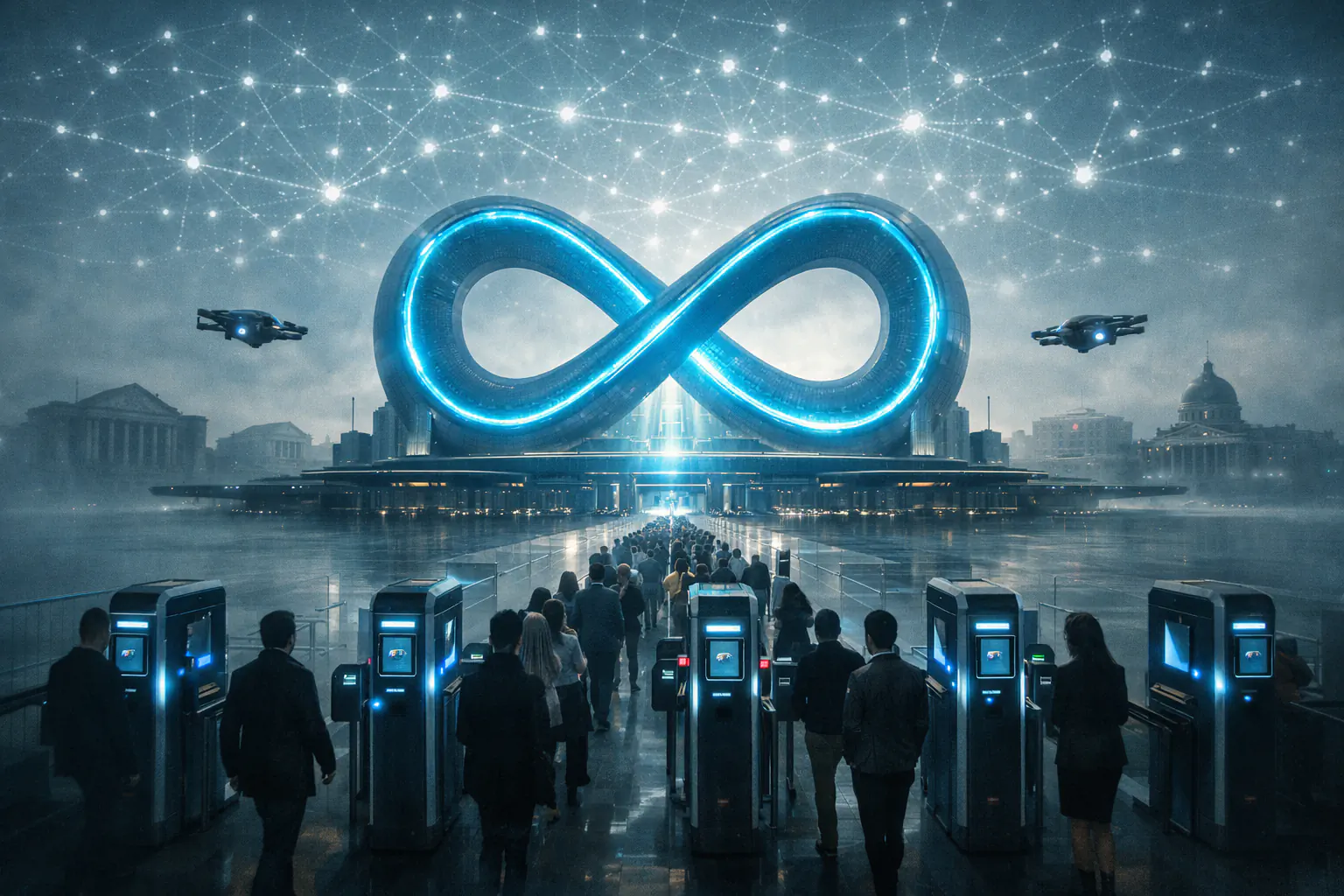
On November 18, 2025—two months before the Instagram leak—something even more significant happens. Federal Judge James Boasberg dismisses the FTC’s antitrust case against Meta. A historic decision that barely breaks through mainstream news cycles.
The case, filed in December 2020, asked for something radical: break up Meta. According to the FTC, the company implemented a “buy-or-bury” strategy—buy potential competitors or destroy them—through Instagram’s acquisition in 2012 for $1 billion and WhatsApp’s in 2014 for $19 billion. The goal: eliminate threats and consolidate a monopoly in “personal social networking.”
After nearly five years of litigation and a six-week trial, Judge Boasberg concludes the FTC failed to prove Meta is currently a monopoly. The reasoning is subtle but devastating: yes, maybe Meta was dominant in 2012 and 2014. But today? Today it competes with TikTok and YouTube. The market changed. Meta itself reshaped Facebook and Instagram from social-connection platforms into algorithmic video platforms to counter TikTok. That adaptability is used as evidence it lacks monopoly power.
A perfect circular logic: Meta adapts to crush emerging competitors, and that ability to crush competitors becomes proof it isn’t a monopoly. The skill of neutralizing threats becomes evidence of the absence of market power.
Look at the numbers. In November 2025, Meta controls 3.98 billion monthly active users across its “Family of Apps”: Facebook, Instagram, WhatsApp, Messenger. Nearly half of the world’s connected population. WhatsApp is dominant in more than 150 countries. Integration levels across platforms create multiplicative network effects.
The verdict seals a Kafkaesque paradox: Meta is too dynamic to be a monopoly under 20th-century legal criteria, yet dominant enough to control the digital communications of four billion people. Legally, not a monopoly. Functionally, a privatized critical infrastructure without democratic oversight.
THE IMPERFORABILITY OF META
In 1980, Robert Metcalfe formulated a simple law: the value of a telecommunications network is proportional to the square of the number of connected users. The more people use it, the more valuable it becomes for each user. With four billion users, Meta no longer operates under linear network effects. It operates under different physics—where platform mass itself creates gravitational force that attracts and retains users regardless of service quality.
In many countries, WhatsApp isn’t just messaging—it’s the channel through which people access government services, run commerce, organize communities. In India, Brazil, Indonesia, Mexico, WhatsApp has become synonymous with digital connectivity.
When an infrastructure serves billions for essential functions, its governance becomes a public-interest issue. But unlike traditional utilities—energy, water, transport—these digital infrastructures aren’t subject to the same public-service obligations, resilience standards, or democratic supervision.
This creates a political paradox: regulators can’t afford sanctions that might destabilize platform operations without triggering massive social disruption. Meta knows it—and uses it as leverage.
INFORMATION ASYMMETRY
In January 2026, when Malwarebytes flags a dataset of 17.5 million Instagram profiles on the dark web, Meta replies: it’s “scraping,” not a “breach.” A technical distinction: scraping extracts data through automated API requests; breach implies internal system compromise. But who can verify the claim?
Only Meta has full access to server logs, API metrics, access histories. Regulators must take the regulated company at its word. Ranking algorithms shaping what four billion people see each day are proprietary black boxes. Internal security is opaque. Engagement metrics are unilaterally controlled.
Frances Haugen—the whistleblower who disclosed thousands of internal Facebook documents in 2021—exposed the scale of that opacity. Meta had research indicating Instagram harmed teenage mental health, but those findings weren’t shared with regulators.
FINES AS OPERATING COST
From 2018 to 2024, Meta generated roughly $690.6B in revenue with an estimated $211.7B in profit, while absorbing about $9B in fines for privacy violations, anti-competitive practices, and child protection. They look huge. They’re about 1.3% of revenue and 4.2% of profit.
Fines aren’t deterrents. They’re predictable balance-sheet entries—risk factors to amortize across future quarters. Meta even carved out a dedicated line item: in 2025 it allocated $1.2B for “regulatory compliance technology.” Not to comply, but to navigate fragmented regulation, delay implementations, negotiate exemptions, and play jurisdictional arbitrage across dozens of legal regimes.
THE FINAL ACT: JANUARY 2026 AND AFTER
Back to the beginning. It’s January 2026. Seventeen and a half million Instagram profiles circulate on the dark web. Users receive suspicious emails. Malwarebytes raises the alarm. Meta issues a standard statement. Media cover it for a few days. Then the story fades out of the news cycle.
In a few months, maybe the Irish regulator opens an investigation. In a year or two, a fine arrives. Meta pays it, issues a press release about “commitment to user privacy,” updates terms nobody reads—and in the meantime generates another hundred billion in ad revenue.
User counts keep rising. 3.98 billion becomes 4.2, then 4.5. New markets are captured. New competitor features are copied and injected into the ecosystem. The empire expands silently.
And in a few years, there will be another leak. More stolen records. More apology emails. More fines. More promises. Same script, same actors, same result: nothing changes structurally.
This is the reality of the unpierceable platform-society. Not invulnerable—imperforable. It built four columns of power: gravitational lock-in, infrastructural dependence, information asymmetry, and the internalization of sanctions. It turned scale into a defensive weapon. It made indispensability into immunity.
Because this is the point: Meta isn’t an anomaly. It’s a model. Google, Amazon, Apple operate through similar logics. Each built its own columns of imperforability. Each turned size into political immunity.
The January 2026 Instagram leak forces a choice: keep treating every scandal as an isolated incident—punishing symptoms with fines absorbed as operating costs—or recognize we’re dealing with a new form of power that requires new instruments.
Mandatory interoperability to break lock-in. Structural separations to dismantle too-big-to-fail. Public audits to dissolve information asymmetry. Democratic governance to realign incentives. Not easy solutions—just the only ones aimed at causes rather than effects.
Ten years from now, we’ll look back at this moment. Either it was the beginning of a radical rethink of platform power. Or it was just another episode in the long series of scandals that changed nothing. The choice is—unbelievably—still ours. But time is tightening. Every day, the columns become more solid. The empire becomes harder to crack.
The platform-society is imperforable. For now. But nothing is permanent—if we are willing to redesign the architectures.
SOURCES
- Malwarebytes — “Received an Instagram password reset email? Here’s what you need to know”
- Malwarebytes — public statement on the 17.5M Instagram dataset
- The Verge — Instagram says it fixed the issue that triggered password reset emails
- TechRadar — Meta denies breach; coverage on the reset-email wave and leak claims
- FTC v. Meta — Memorandum Opinion (Judge James E. Boasberg), Nov 18, 2025
- Irish DPC — Instagram Inquiry decision (€405m), Sep 15, 2022
- Irish DPC — Facebook “Data Scraping” Inquiry decision (€265m), Nov 28, 2022