The Fentanyl Pharaoh
Incognito Market: How a $105 million marketplace operated in the shadows — and why the most uncomfortable question is not who built it, but who knew.
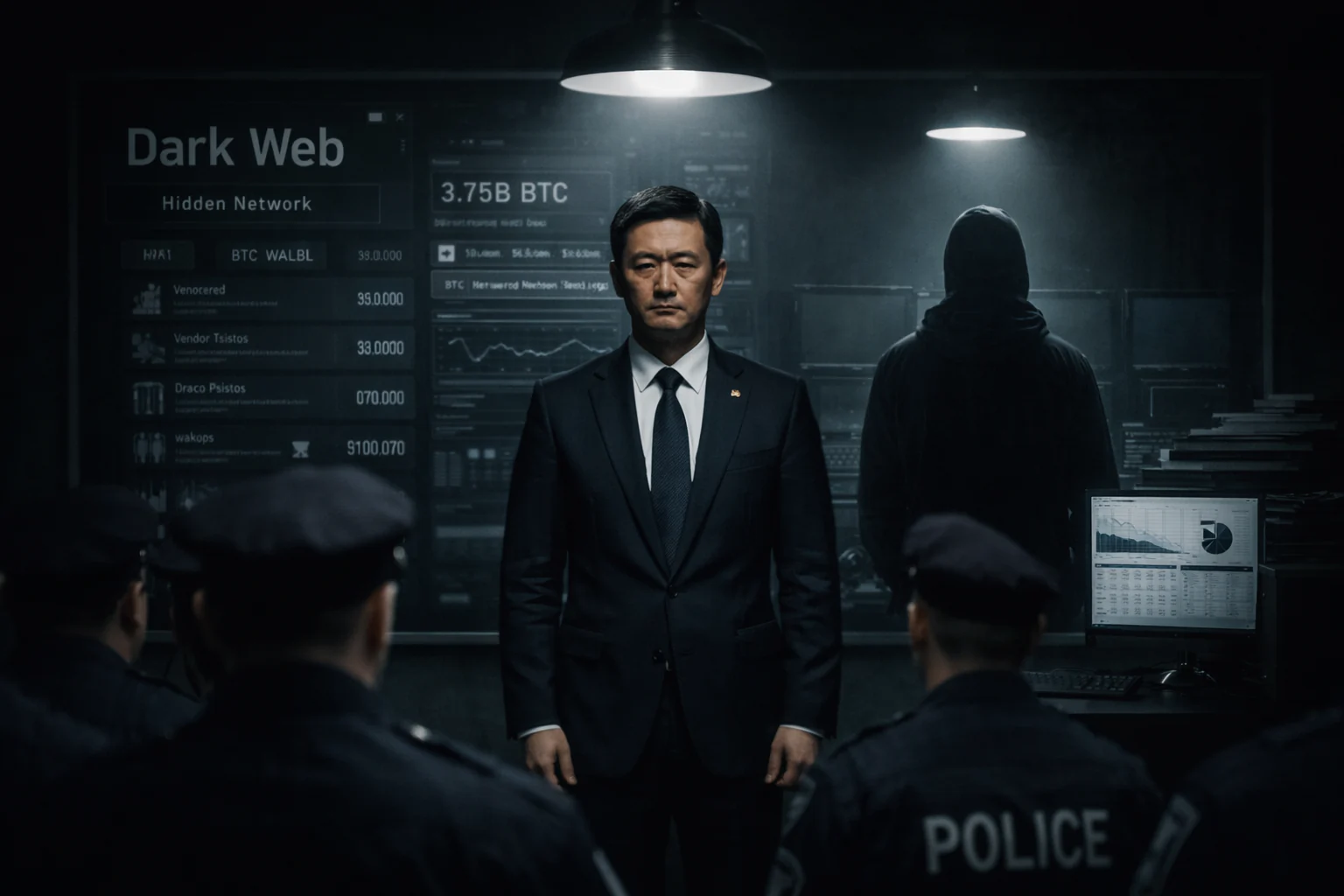
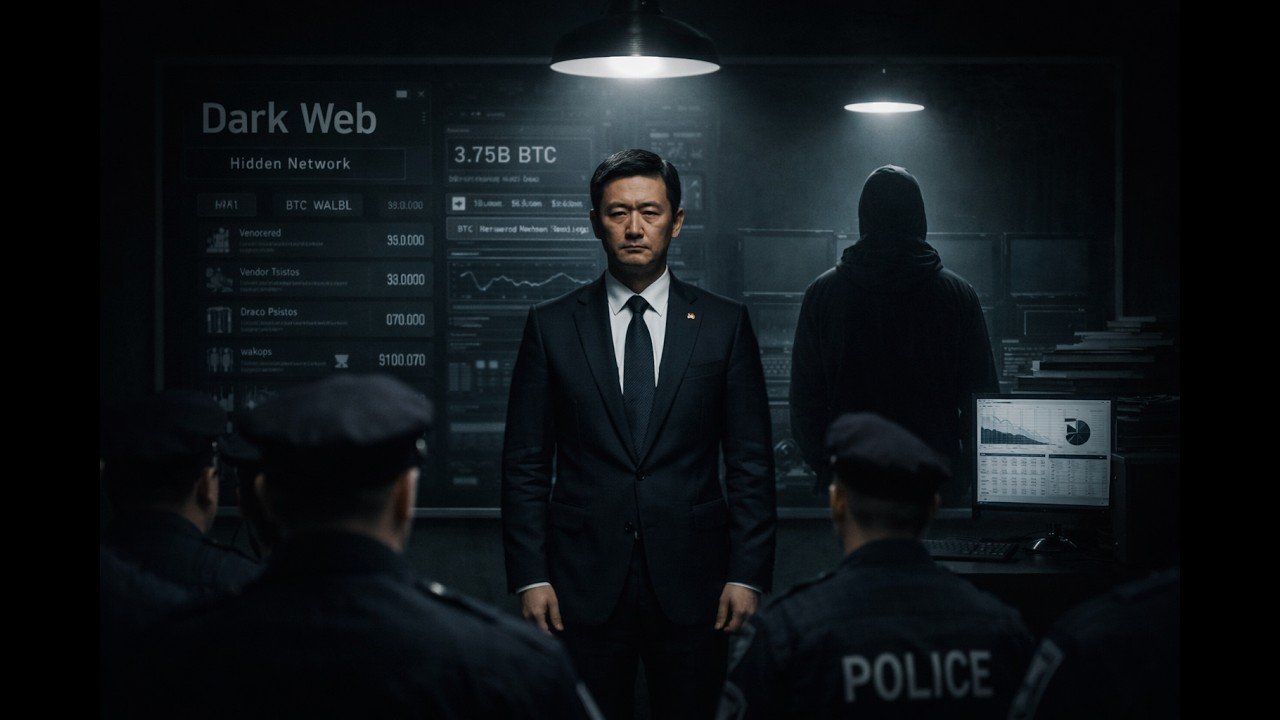
There is one image worth more than any analysis. Rui-Siang Lin, twenty-four years old, a Taiwanese citizen and Assistant Technical Officer at Taiwan’s Ministry of Foreign Affairs on diplomatic assignment in Saint Lucia, stands before a room full of police officers. He is training them. The subject of the lesson is blockchain analytics — how to trace cryptocurrency transactions, how to identify wallets, how to follow dirty money across the distributed chain of the immutable. Lin is precise. Authoritative. He knows the subject better than anyone in the room. He documents it on his own social media profiles as proof of institutional competence.
At that same moment, on the other side of an encrypted connection crossing the world, Incognito Market is processing thousands of orders. Oxycodone. Methamphetamine. Heroin. Pills pressed in clandestine labs and cut with fentanyl in lethal quantities. The platform Lin built and personally managed — the one for which he collected 5% commissions, resolved disputes between vendors and buyers, and distributed salaries to his staff in cryptocurrency — keeps running silently while he teaches investigators how to hunt someone exactly like him.
That duality is not irony — it is the structure from which this story begins. A conscious architect building, in parallel and with the same care, two opposing infrastructures: one for the state, one against it. A system in which technical competence had detached itself from the values it was supposed to defend, and that detachment worked perfectly, until it stopped working.
But to understand Incognito Market, you need to take a step back. Not to Lin. To the moment the illegal digital market stopped being an ideology and started becoming a business.
Silk Road — the first major dark web marketplace, founded in 2011 by Ross Ulbricht — was born from a libertarian utopia. Ulbricht imagined himself as a revolutionary taking drug commerce away from cartel violence and entrusting it to the logic of reputation and the free market. Naive, certainly. Dangerous, without a doubt. But at least intellectually coherent. When the FBI dismantled it in 2013, the darknet markets movement lost its founder — but gained something more durable: a proven business model and a global customer base that had learned to trust those systems. What came afterward was no longer ideology. It was optimization.
Incognito Market, founded in October 2020 during a moment of instability for other giants in the sector — AlphaBay already dismantled in 2017, Empire Market having just vanished in a $30 million exit scam — did not present itself as a clandestine bazaar. It presented itself as Amazon. Polished graphical interface, vendor rating systems, structured dispute management, customer support. Lin had understood what his predecessors had failed to fully absorb: in the underground economy, the secret of success is not opacity. It is trust. And trust is built in exactly the same way Shopify, eBay, or any legitimate digital platform intermediary builds it. Through user experience. Through consistency. Through the implicit promise that the system will work.
The story of Incognito Market does not end with the capture of the Pharaoh. It begins with the question that capture does not answer.

The Infrastructure of Trust – Incognito Market
The “Incognito Bank” was not an operational detail. It was the core of the project. Inside the platform, Lin had built a complete financial system — three distinct functions working in sequence to produce the only thing an illegal market needs in order to survive: the perception of security.
First: the escrow system. Buyers’ funds were automatically held until delivery of the goods was confirmed. Not because Lin had moral concerns for his customers — but because without escrow, vendors scam buyers, buyers stop purchasing, and the market dies. The logic is identical to PayPal or any buyer-protection system in legitimate commerce. Applied to cocaine. Second: automatic conversion between Bitcoin and Monero. Bitcoin has a public blockchain — every transaction is permanently recorded and traceable. Monero is designed to be opaque: addresses, amounts, and counterparties are cryptographically hidden by default. Incognito Bank automatically converted Bitcoin into Monero for internal operations, handling the complexity on behalf of users. Third: automated payroll. Staff — developers, moderators, dispute managers — were paid directly through the 5% commission on sales. No manual transfers, no contact point between Lin and employees that could become an investigative vulnerability.
These three mechanisms did not produce operational efficiency alone. They produced a defense argument: technological neutrality. Lin could have presented himself as merely an infrastructure provider. It did not work.
The defense of platform neutrality collapses the moment the administrator actively intervenes in the logic of crime. Lin personally managed disputes between vendors and buyers, supervised the code, decided which products were allowed for sale, and removed moral barriers whenever revenue made it worthwhile. A hosting provider does not do that. An organizer does — and that distinction is what, in court, separates a technical offense from a Continuing Criminal Enterprise charge: an accusation historically reserved for cartel leaders, not software developers.
470,000 registered buyers are a market. With its demand, its supply, its distribution chain. Lin did not invent that market — he built the most efficient platform available to serve it. And that distinction does not absolve him. It condemns him.
January 22, 2022: The Decision That Kills and the End of Incognito Market
There is a precise moment when the story of Incognito Market changes its nature. Not with the arrest. Not with the trial. With a policy announcement. On January 22, 2022, Lin opened the marketplace to the indiscriminate sale of opioids. It was a strategic decision. Cold. Calculated. Until then, many dark web platforms had maintained a sort of implicit code around substances with a high risk of lethal overdose — not for moral reasons, but for survival reasons: attracting documented deaths means attracting a completely different order of investigative attention. Lin erased that calculation. The demand for oxycodone, hydrocodone, and prescription drugs was real, the 5% commission multiplied across higher prices, and vendors bringing opioids brought liquidity. The marketplace was flooded with listings.
The structural problem in that market was invisible to the buyer: many of those drugs did not exist. They were pills pressed in clandestine labs that mimicked the shape and color of oxycodone — but were composed almost entirely of fentanyl. Fentanyl is fifty times more potent than morphine. A lethal dose is measured in micrograms. For someone purchasing what they believe is a prescription drug, the difference between the authentic product and the counterfeit one is invisible to the naked eye. To the body, it is the difference between addiction and death.
On September 13, 2022 — exactly two hundred sixty-four days after Lin’s strategic decision — a 27-year-old man from Arkansas ordered what he believed was oxycodone on Incognito Market. The pill he received was composed almost entirely of fentanyl. He died. The autopsy documented everything with the indifferent precision of forensic medicine.
This death was not a statistical side effect. It was the direct and foreseeable consequence of a business decision: opening a market to lethal counterfeit substances in order to maximize revenue. Federal prosecutors treated it exactly as such, turning it into the centerpiece of the case. Lin was responsible for the decisions that made that death possible — the defense of neutral infrastructure does not hold when the infrastructure was designed for that exact purpose.
But that question is still incomplete. The full question is this: between January 22, 2022 and September 2022, was there someone who already knew Incognito Market from the inside — not as an outside investigator, but as an operational presence within the platform — and who had the information, the means, and the legal obligation to interrupt that flow of fentanyl before it reached Arkansas? The answer, according to Wired’s investigation, may be yes. And this is the part of the story the sentence does not tell.
The FBI’s Silent Informant
Wired’s investigation, published between late 2024 and early 2025, introduced into the public record of the case an element no government source had mentioned: one of the key members of Incognito Market’s operational staff was, while the platform was still running, a Confidential Informant under FBI control. It is a claim that, if confirmed in its full implications, changes the entire reading of the case.
Department of Justice guidelines for the use of confidential informants include a category called Otherwise Illegal Activity — OIA. In essence: an informant may be authorized to participate in criminal activity if that is the only way to obtain evidence that could not otherwise be acquired, or to prevent serious physical harm. “Tier 1” authorizations, the ones covering large-scale drug trafficking, require the highest levels of internal approval. On paper, they require that the benefit of the investigation outweigh the risk of the criminal activity being permitted. On paper.
The logic of OIA is calculated harm. Certain crimes are tolerated in order to dismantle larger structures. It is the same logic as burning fields to stop a wildfire. The problem is that burned fields have names.
The Government Accountability Office has documented in several reports that the FBI frequently fails to provide adequate written instructions to informants regarding the precise limits of their authorized activity. This creates an operational gray zone — a zone in which it becomes difficult to distinguish, in retrospect, between what was part of the controlled operation and what was the informant’s autonomous action.
American history involving informants and organized crime contains precedents that should not be forgotten. Whitey Bulger was an FBI informant while ordering murders in Boston. Stephen Flemmi operated under federal protection while his recruiter inside the agency destroyed evidence and manipulated witnesses. In both cases, the logic was the same: access inside criminal organizations was considered more valuable than the moral cost of tolerated crimes. In both cases, that logic proved wrong — not only ethically, but operationally, because it corroded from within the credibility of the very institutions it was supposed to strengthen.
In the case of Incognito Market, the question Wired raises without yet being able to answer with certainty is this: did the FBI have the technical capacity to shut down or limit the opioid section of the marketplace before September 2022? And if so, did it choose not to do so in order to keep the data-collection infrastructure on global vendors operational? We do not know. We may never know. The legal architecture that would make such a choice possible exists, the protocols that would justify it exist, and the historical precedents that make it plausible exist. The Arkansas man who dies of fentanyl while the FBI gathers data on 1,800 global vendors becomes, in this reading, something more precise than collateral damage: he becomes the measure of the price someone decided was acceptable to pay. Without saying it. Without writing it. Without answering to anyone.

Blockchain and Flesh: How Does a Pharaoh Fall? The End of Incognito Market
Operation RapTor was presented as a triumph of international cooperation and cryptocurrency forensic analysis. And in part, it was. But the technical reading of the investigation reveals something more fundamental: Lin was not captured by the technological superiority of investigators. He was captured by the friction between the digital economy and the physical one. Monero — the cryptocurrency favored by the platform for its privacy structure — is nearly opaque to standard blockchain analytics. But every economic system, no matter how sophisticated, has exit points into the real world: a domain is purchased, a server is paid for, funds are withdrawn to a centralized exchange with KYC procedures. These are the friction points — the moments when digital anonymity has to negotiate with the institutions of the physical world that require verifiable identities.
Lin had used a cryptocurrency wallet registered in his own name to purchase internet domains through Namecheap. He had used the same Taiwanese phone number and the same email address for multiple transactions with domain registrars. Then, in October 2023, he filed a visa application for the United States — providing in that official document the same digital coordinates investigators had already linked to “Pharaoh.” As if the hubris accumulated over four years of impunity had eroded his operational judgment. Blockchain intelligence software did the rest: heuristic linking between seemingly disconnected wallets, transaction patterns emerging statistically from the background noise of Bitcoin’s public blockchain. The IRS Cyber Division and the FBI worked in a complementary manner, using centralized exchanges as the entry point to physical identities.
The supreme irony: Lin knew these tools exactly. He had taught them. He knew how on-chain tracing worked, how agents linked wallets to identities. And yet, running a $100 million operation for four years produces such an amount of data that avoiding every single operational security mistake becomes mathematically improbable.
In May 2024, Lin passed through JFK Airport en route to Singapore. Authorities were waiting for him. The arrest was quiet, almost bureaucratic in its execution. There was no cinematic raid, no handcuffs before the cameras. There was only the relentless logic of a system that, once it has identified its target, closes the circle with the precision of an algorithm.
Incognito Market and the Final Extortion: “YES, THIS IS AN EXTORTION”
March 2024. Vendors begin reporting anomalies in withdrawals. The Bitcoin is not arriving. Internal wallets show balances that no longer move. The platform is dying — not because of a law enforcement operation, but because of the deliberate choice of its creator to loot the last available wealth before exiting. The Incognito Market exit scam stole more than one million dollars from vendor and buyer deposits. It is a relatively modest figure compared with the $105 million in total volume — but what happens next is what makes the case unique in the history of darknet markets.
Lin posts a message. A message addressed to every single person who had ever used his platform — hundreds of thousands of people scattered across the world, with drug orders in their purchase history. The message is direct. Almost admirable in its brutality: pay or I release the database. Names, shipping addresses, complete transaction histories to global authorities. The deadline is set. The sum is in cryptocurrency. And the line that opens the message — documented in federal court records — is: “YES, THIS IS AN EXTORTION!!!”
The grammar is that of a claim, not a threat. Lin was not warning. He was describing a method: I built this system to extract value. I extracted value from vendors. I extracted value from buyers. Now I extract value from your fear.
Here the Incognito Bank returns — and here its deepest function is revealed. The escrow system, the centralized management of deposits, the internal BTC→XMR conversion: all of this had built in users a dependence on the platform as custodian of their funds. When Lin freezes withdrawals and launches the extortion, he is using the same infrastructure of trust he built in order to grow — and reversing it. The system that had imitated Amazon in order to earn credibility reveals, in the end, its only real function.
For federal prosecutors, that act of extortion was a gift. Proving that Lin possessed the exclusive cryptographic keys to the server and the hierarchical control of the entire organization — the key legal requirement for the Continuing Criminal Enterprise charge — no longer required elaborate forensic reconstructions. He had declared it himself, publicly, in a message that began with a confession.
The Sentence Against Incognito Market and the Question That Remains
Thirty years. Restitution of $105 million. Three seized servers containing data on more than half a million transactions, now serving as the basis for secondary proceedings against high-level vendors distributed globally. McMahon, drawing on nearly three decades of federal criminal casework, described the operation as the most serious drug crime she had ever encountered. The sentence is massive in its numbers. But the narrative it produces is one of completed triumph — and that is where the problem begins.
The question Wired’s investigation introduced into the public record receives no answer in the sentence. It receives no answer from any court document. And this absence is, in itself, informative. If an FBI informant was operating inside Incognito Market while the platform sold fentanyl in counterfeit pills — if that presence was known to supervising agents and to the chains of approval for OIA — then the risk-benefit assessment that justifies such operations needs to be reexamined. Not as a procedural issue. As a question about the moral architecture of democratic institutions.
Investigative agencies have an internally coherent logic: every premature disruption destroys the map being built. The longer one observes, the more visible the network becomes — vendors, distributors, financial flows outward. It is a logic that works — until the moment the crime being observed kills someone who could have been saved. The Attorney General’s guidelines allow those trade-offs. Courts rarely challenge them. Congress supervises them intermittently and with inadequate tools. And the speed of digital transactions gives these operations a far thicker veil than any historical precedent.
The investigative system that dismantled Incognito Market works like any surveillance system works: by turning people into data. Lin was data to be collected. The vendors were data to be identified. Buyers were potential data. In that logic there is something coherent — and something that, when applied without external oversight, becomes indistinguishable from the system it is supposed to fight. The Arkansas man was data as well. He appears in court records as an aggravating element, functional to the prosecution. Not as the reason those equations should be rewritten.
Rui-Siang Lin’s thirty-year sentence is just. The architecture that made four years of operation possible — the criminal one and, potentially, the one of failed oversight — remains standing. The next Incognito Markets are already running somewhere behind Tor. They are already collecting data. Someone is already watching them. Whoever builds the next marketplace has already studied Lin’s mistakes. What we do not know is whether those who will have to stop it have studied their own.
Postscript
At the time this article was published, Wired’s reporting on the informant’s activities had not been confirmed by official government sources — it is cited here as an element of critical analysis of institutional oversight, not as an established fact. Federal court documents, DOJ statements, and Operation RapTor reports form the verifiable core of this reconstruction.
The broader case history of FBI informants operating under OIA — Whitey Bulger, Stephen Flemmi — is documented in Massachusetts court archives and congressional records. GAO reports on informant oversight are public and available for consultation.
- DOJ — USA v. Rui-Siang Lin: official statement on the sentencing (SDNY)
- Wired — The FBI informant inside Incognito Market (2024–2025)
- DOJ — Mukasey Guidelines: guidelines for Confidential Informants (2008)
- GAO — Oversight of FBI informants: reports on the CI program
- FBI / HSI — Operation RapTor: documentation of the international operation