Paragon Graphite Spyware: The Spy in Your Pocket
Paragon Graphite Spyware: Journalism · Intelligence · Power
The Paragon Graphite spyware case is not only about compromised phones. It exposes a more subtle fracture: surveillance tools sold to states, journalists and activists exposed, foreign private vendors, incomplete logs, and responsibilities that are difficult to reconstruct. The phone becomes the point where national security, press freedom, and democratic oversight enter the same device.
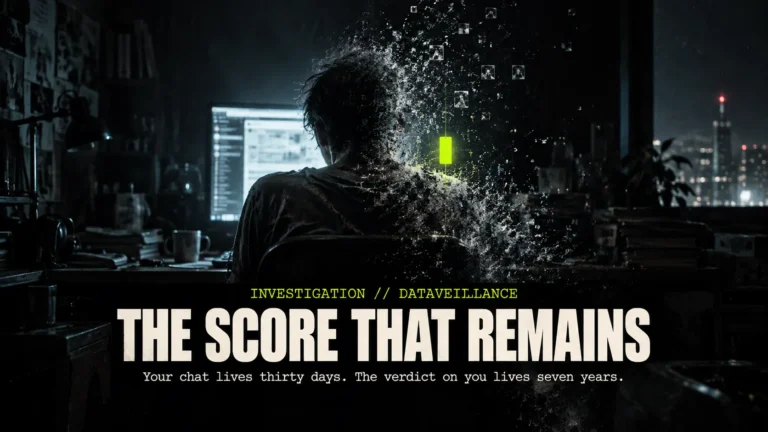
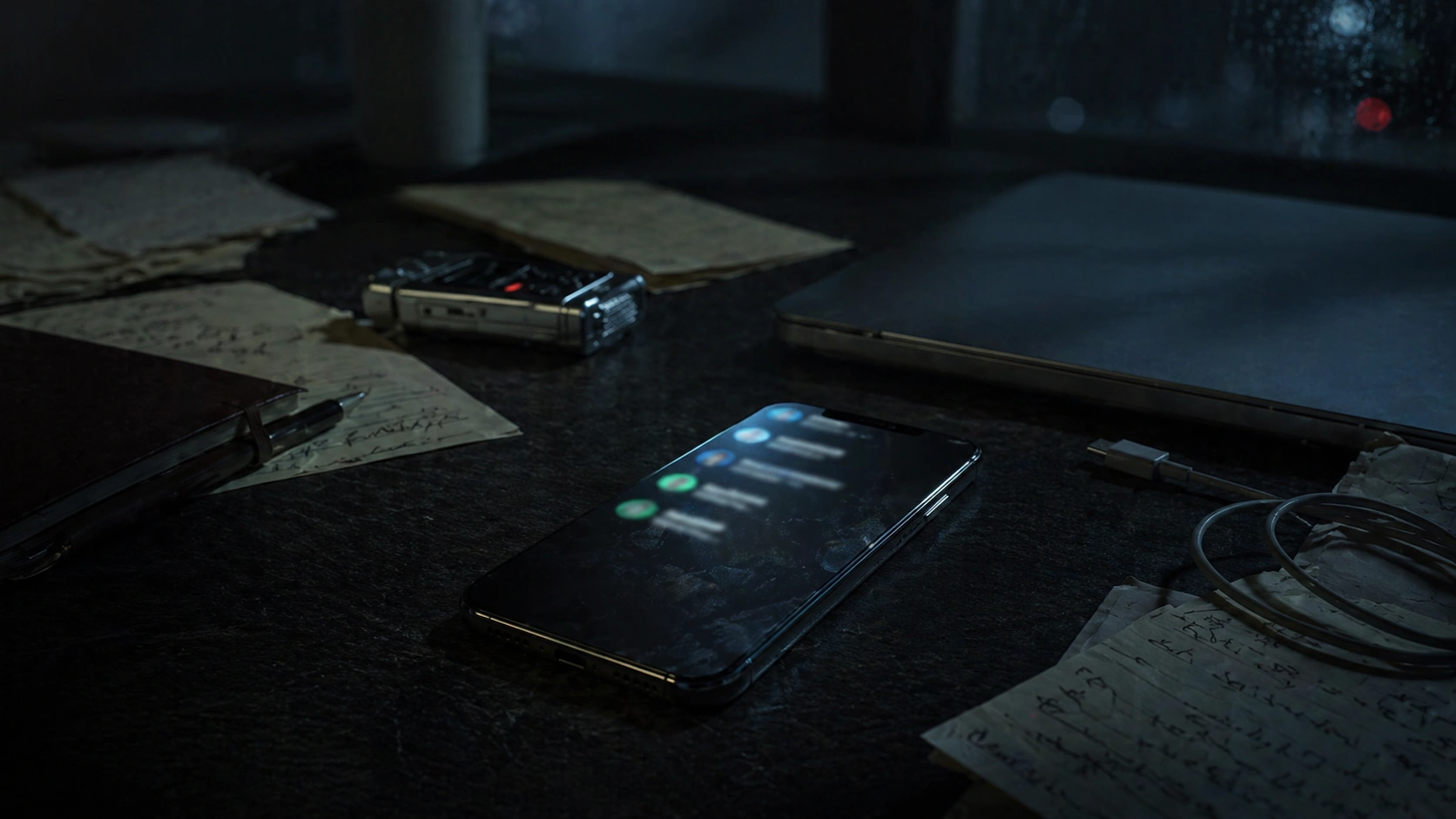
A desk, the low light of a room, a phone left beside a computer. On the screen: a chat, the name of a source, a few unread notifications. Nothing seems out of place.
That ordinary appearance is precisely what makes the case harder to look at. Contemporary spyware does not need a spectacular scene. It does not always ask for a click, does not necessarily leave a visible mark, does not interrupt the day of the person it targets. It can enter while the device continues to look exactly the same.
In the Paragon case, that device is not an isolated object. It is a personal and professional archive: messages, sources, drafts, contacts, encrypted conversations, traces of journalistic work, civic networks. That is why infecting a smartphone does not only concern the privacy of its owner. It also concerns the people who wrote to that person, spoke with them, sent documents, or entrusted them with information.
Paragon Graphite Spyware: Italy’s Spyware Crisis
The case erupted between 2025 and 2026, after WhatsApp notified around 90 users worldwide that they had been targeted by spyware linked to Paragon. Journalists, activists, and members of civil society were among the profiles involved. In Italy, the government acknowledged that some Italian users were involved, while denying that it had illegally spied on journalists or protected subjects.
The names that entered the public reconstruction are politically sensitive: Francesco Cancellato, editor-in-chief of Fanpage.it; Ciro Pellegrino, a journalist at the same outlet; Luca Casarini and Giuseppe Caccia, linked to Mediterranea Saving Humans; and Roberto D’Agostino, founder of Dagospia, listed by European press freedom organizations among the unresolved cases.
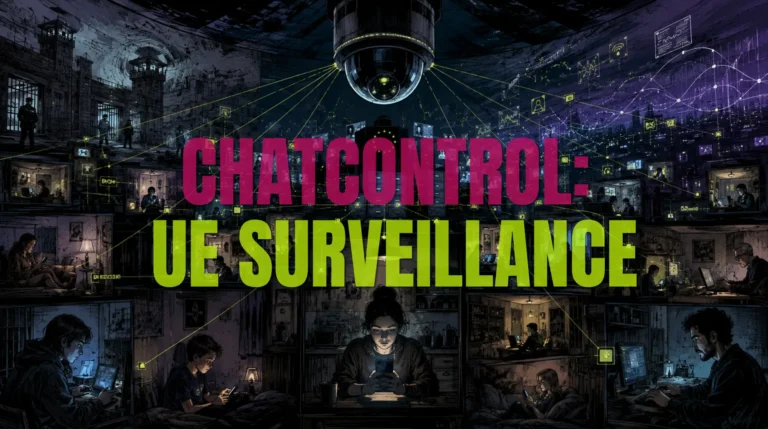
Graphite, developed by Paragon Solutions, belongs to the market of government spyware. It is different from traditional wiretapping. It does not merely follow a phone call or a specific conversation. It can turn a phone into an access surface: chats, archives, contacts, metadata, notifications, encrypted apps, past and future communications.
The issue, then, is not only who was targeted. It is whether the democratic system has enough tools to reconstruct the use of technologies designed to remain invisible.
When the target is a journalist, spyware does not read only one person. It also crosses through their sources.
Paragon Graphite Spyware: Android and iOS
The strongest public reconstruction distinguishes between two technical tracks. The first concerns the Android devices of Francesco Cancellato, Luca Casarini, and Giuseppe Caccia. In March 2026, technical consultants in the Italian investigations identified traces of malware on three Android devices, with anomalies in WhatsApp databases compatible with Graphite’s operation.
The second track concerns iOS and the case of Ciro Pellegrino. Citizen Lab assessed with high confidence that the Fanpage.it journalist was targeted with Paragon’s iOS spyware. The logs included an iMessage account identified as ATTACKER1, also observed in another European case.
This distinction matters. Cancellato should not be placed in the iMessage/ATTACKER1 track. In the more cautious version, his case belongs to the Android/WhatsApp track that emerged from the Italian technical findings in 2026. Pellegrino, by contrast, is the case linked to the iOS/iMessage vector documented by Citizen Lab.
The shared pattern remains: journalists and activists, zero-click tools, opaque infrastructures, and responsibilities that are still not fully clarified.
The Night of December 14, 2024
The most delicate timeline detail comes from the 2026 technical findings. According to public reconstructions, the compromises of the Android devices belonging to Cancellato, Casarini, and Caccia reportedly occurred in the early hours of December 14, 2024. The temporal proximity of the attacks suggests a possible coordinated campaign, although the material authors remain under investigation.
The sequence touches, within the same time window, the editor of a news outlet and two activists connected to sea rescue operations. An investigative newsroom, an NGO, a politically sensitive issue. It is not enough to prove a single motive, but it defines a perimeter that prosecutors must reconstruct.
Access to the Graphite servers used by AISI adds the most controversial passage. Journalistic reconstructions indicate that the analysis reportedly confirmed operations on the devices of Casarini and Caccia, but did not detect traces referring to Cancellato. Based on public information, the attack against Fanpage’s editor-in-chief has not been attributed to AISI.
This absence does not close the case. If the device shows traces compatible with Graphite, but the inspected servers do not return a corresponding operation, several hypotheses remain open: another operator, a different infrastructure, incomplete logs, missing records, or technical chains that cannot be fully verified.
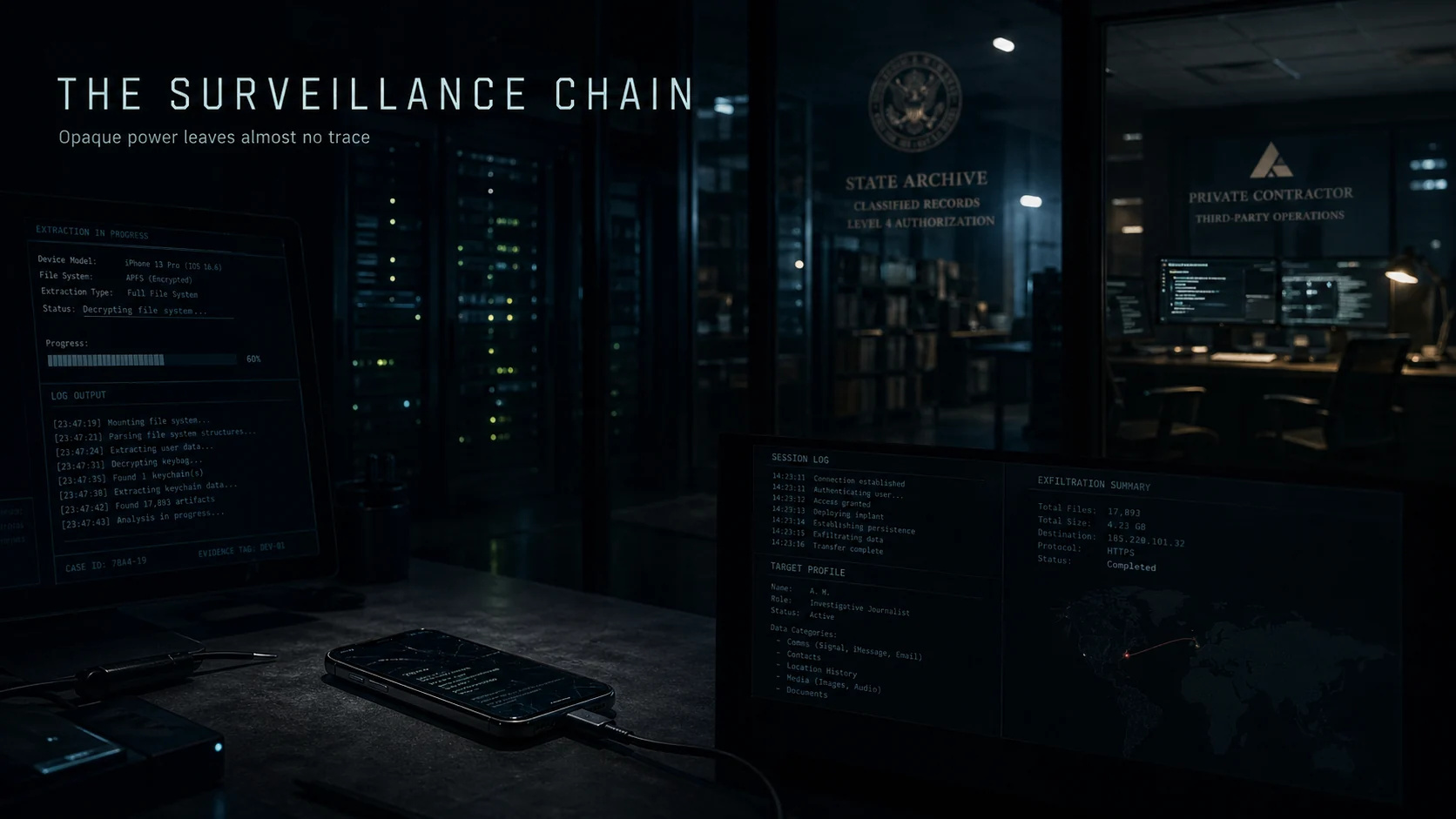
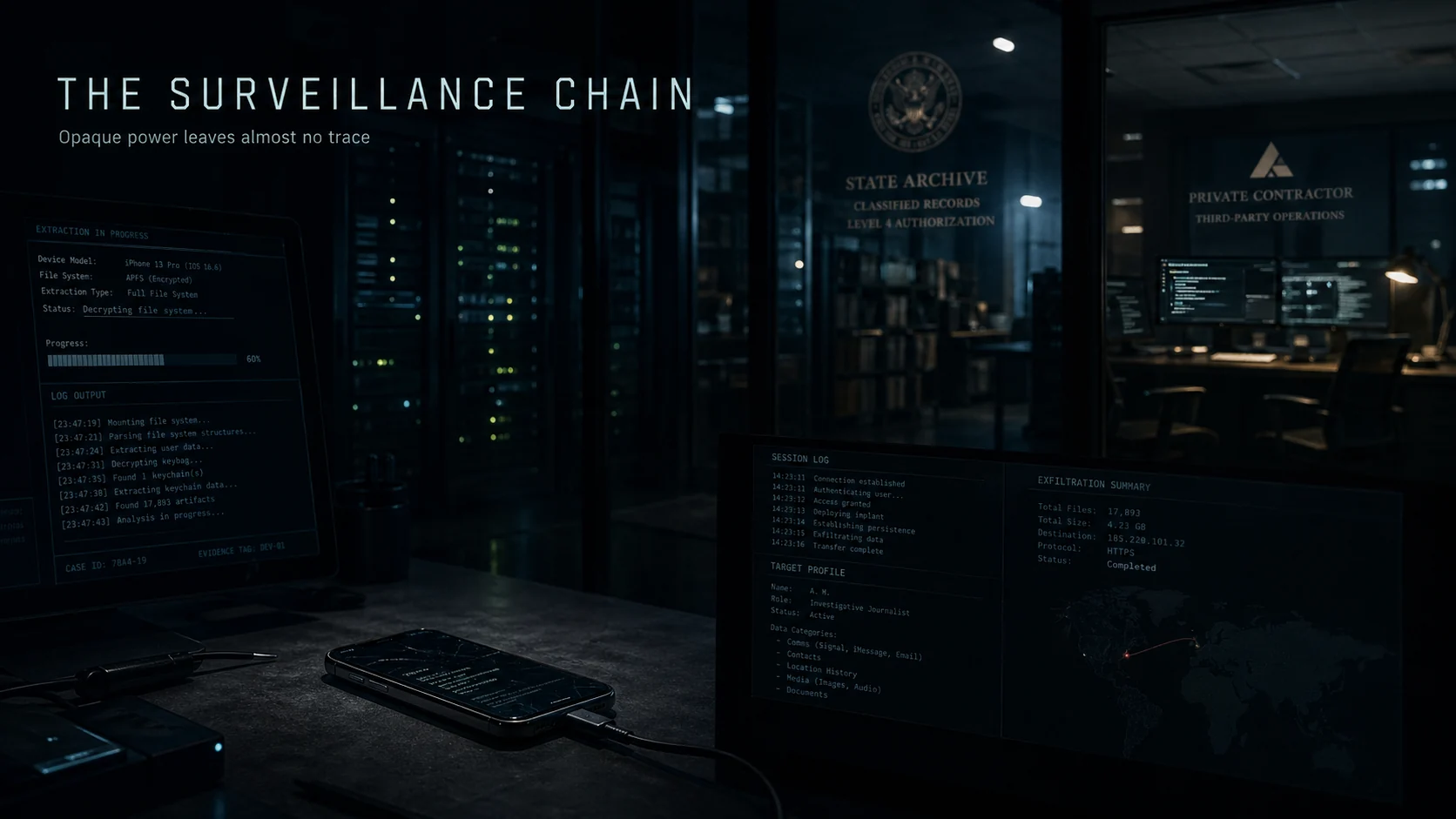
Paragon Graphite Spyware: The Surveillance Chain
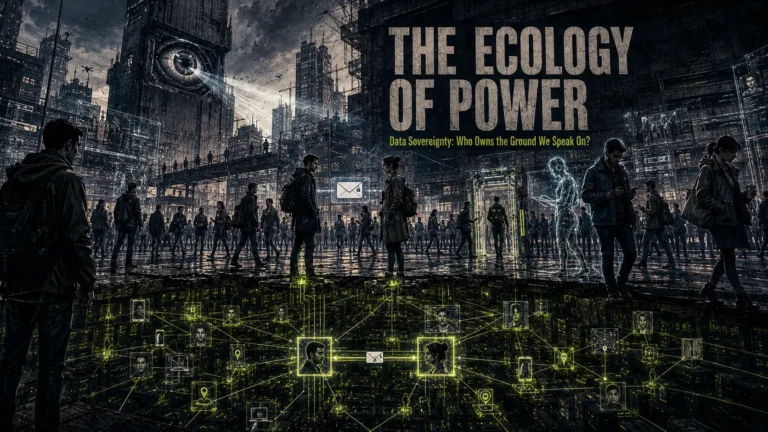
The Paragon case cannot be understood by looking only at the infected phone. The phone is the last visible point in a longer chain: contract, license, authorization, vulnerability, technical infrastructure, vendor, server, logs, device, sources.
Contemporary surveillance does not work as a single action. It works as a chain. When one link remains opaque, responsibility disperses.
Follow The Algorithm · Surveillance Chain
From Contract to Silence
Invokes national security, crime, terrorism, or emergency.
Buys offensive capabilities from a foreign private vendor.
Uses vulnerabilities invisible to the user, often zero-click.
Routes data and commands through infrastructures that are difficult to attribute.
Becomes an open archive: chats, sources, contacts, notifications, memory.
Surveillance also reaches those who communicate with the target.
Perceived risk reduces trust, testimony, and freedom of speech.
ATTACKER1 and CVE-2025-43200
The iOS track introduces a decisive technical detail: the CVE-2025-43200 vulnerability. Apple confirmed to Citizen Lab that the observed zero-click attack had been mitigated with iOS 18.3.1 and associated with this vulnerability. The vector exploited Messages and content shared through iCloud Link.
Zero-click means the victim does not have to touch anything. There is no need to open an attachment, follow a link, or reply to a message. The device can be reached through an apparently ordinary channel and compromised without any visible action by the user.
Citizen Lab links Ciro Pellegrino’s case to the iMessage account ATTACKER1. The same indicator appears in another European case. Because each spyware customer usually tends to have dedicated operational infrastructure, the recurrence of the same account suggests a connection between the operations.
Not every responsibility has been defined in judicial terms. But the technical layer indicates a structure, not a random incident. When that structure touches journalists, sources, and newsrooms, the matter stops being only technical.
Paragon Graphite Spyware: The Invisible Newsroom Companion
A smartphone is not a private object in the traditional sense. A journalist’s phone contains contacts, sources, drafts, unpublished messages, communications with lawyers, editors, whistleblowers, intermediaries. An activist’s phone contains operational maps, coordination chats, documents, photographs, movements.
By breaching the device, spyware does not enter a conversation. It enters an organized life. Classic wiretapping follows a stream. Modern spyware can move through the archive, read what has already been written, and prepare to read what will be written next.
For this reason, Graphite cannot be treated as a simple technical evolution of wiretapping. It is a remote, invisible, potentially continuous search. Access to the digital body of the person.
When the target is a journalist, the damage does not concern individual privacy alone. It concerns freedom of information, because every potential source learns a practical lesson: the channel may not be protected.
Censorship does not always need to close a newspaper. Sometimes it is enough to make the channel between a source and a newsroom unsafe.
Fanpage.it and the Effect on Sources
Fanpage.it occupies a central place in the affair. The outlet has published politically sensitive investigations, including investigations into the youth wing of Brothers of Italy. European press freedom organizations have recalled this context when discussing the attack on Francesco Cancellato, while not publicly assigning a definite motive to the targeting.
Caution is necessary. It cannot be claimed that the attack occurred because of those investigations if public evidence does not prove it. The political effect, however, does not depend only on motive.
An editor-in-chief surveilled with spyware changes the behavior of both newsroom and sources. Anyone who has spoken with him may wonder whether their name, number, message, or document ended up in unknown hands. Anyone who was about to do so may stop.
This is the chilling effect: not declared censorship, but induced silence. No formal ban. No newsroom closure. Only the suspicion that the channel is no longer safe.
Mediterranea and the Expansion of National Security
The Italian government acknowledged the use of spyware against Luca Casarini and Giuseppe Caccia, framing it within national security and irregular migration. According to parliamentary documentation reported by Reuters, the surveillance of the two Mediterranea activists was reportedly authorized within the security framework.
The issue does not end with the presence of an authorization. Proportionality remains central. Casarini and Caccia are linked to Mediterranea Saving Humans, an NGO active in sea rescue. Using military-grade spyware against humanitarian activists shifts the boundary between security and dissent.
The category of irregular migration can become an elastic container: crime, logistical networks, political activity, solidarity, and international relations can all be placed inside it. Technology, however, does not change nature depending on the legal label. It remains a tool capable of opening the entire device.
The risk is the normalization of the exceptional instrument. First terrorism, then organized crime, then migration, then activism. Each step can seem justified in the specific case. Over time, however, the perimeter widens.
The Broken Relationship Between Italy and Paragon Graphite Spyware
The relationship between Italy and Paragon Solutions breaks down amid conflicting versions. Some reconstructions indicated that Paragon had ended its contract with Italy after allegations that the spyware had been used against journalists, activists, and members of civil society, in possible violation of contractual terms.
Reuters documented a more complex sequence. Copasir maintained that Italy had first suspended and then terminated the contracts with Paragon after the media outcry. Paragon, by contrast, said it had stopped providing the service and had proposed a technical mechanism to clarify whether the system had been used against Cancellato.
This fracture reveals the paradox of digital sovereignty. The state purchases from a foreign vendor a tool for highly sensitive operations. When suspicion of abuse arises, the vendor defends its reputation, the state invokes national security and secrecy, Parliament receives a filtered version, and prosecutors search for technical evidence in an infrastructure they do not fully control.
Sovereignty becomes operational dependence. Possessing the license is not enough. The technical chain, logs, maintenance, access, and evidence must also be controlled.
Copasir, Secrecy, and Partial Oversight
Copasir is one of the political junctions of the case. On one side, the Parliamentary Committee for the Security of the Republic is the body responsible for overseeing intelligence services. On the other, secrecy limits what can be publicly communicated.
Parliamentary documentation and later reconstructions indicate that Copasir considered the use of Graphite against Casarini and Caccia legitimate, while excluding the involvement of Italian intelligence services in the Cancellato case. This institutional reconstruction still leaves a gap: if Cancellato was targeted, but not through the AISI servers inspected, who did it?
The question does not automatically accuse a specific actor. It exposes a systemic problem. A democracy can tolerate invasive tools only if the chain of authorization, use, audit, and responsibility remains verifiable.
If the investigation stops before missing logs, uncooperative vendors, or separate infrastructures, parliamentary oversight risks becoming partial. And partial oversight is not enough when facing total spyware.
Privacy, the Constitution, and Media Freedom
The Italian Data Protection Authority intervened in February 2025 with an explicit warning: using Graphite or similar systems outside the uses permitted by law violates the Privacy Code and can result in heavy sanctions. This step removes the case from the grammar of intelligence alone.
Spyware is also a personal data processing system. It collects, transfers, organizes, consults, and potentially stores extremely sensitive information. When its use is unlawful, the damage concerns identity, relationships, political orientations, professional communications, legal strategies, and journalistic sources.
The case arrives as the European Union is trying to strengthen media protection through the European Media Freedom Act. The EMFA introduces standards for the protection of editorial independence and journalistic sources, including against intrusive surveillance software.
The problem is operational. It is not enough to have a European rule limiting the use of spyware against journalists. A structure is needed that can establish the abuse, attribute it, document it, and sanction it. Otherwise, the law arrives after the infection, after the compromise of sources, after the loss of trust.
The End of “Ethical” Spyware
Paragon presented itself as a more controlled alternative to the toxic market made infamous by Pegasus and NSO Group. The idea was simple: invasive tools, but sold only to democratic governments; offensive capabilities, but governed by clauses; dangerous technologies, but guided by commercial ethics.
The Italian case consumes that promise. Not because every responsibility has already been definitively established, but because it shows the insufficiency of the model. Spyware can be sold with ethical clauses and still end up at the center of a scandal involving journalists, activists, intelligence services, prosecutors, Parliament, foreign vendors, and European institutions.
Contractual ethics are not enough when the technology enables an invisible search of an entire digital life. Non-alterable logs, independent audits, strengthened authorizations for cases involving journalists, spyware license registries, and clear limits on use against civil society and newsrooms are needed.
Above all, spyware must be recognized as something other than ordinary wiretapping. It is total access.
A democracy can use invasive tools only if it can reconstruct their use. If it cannot, it is not governing surveillance. It is buying it.
The Paragon Graphite spyware case remains open because none of the elements that have emerged is enough, on its own, to close the chain of responsibility.
There are traces compatible with Graphite on devices belonging to journalists and activists. There are operations recognized as legitimate against Casarini and Caccia. There is the Cancellato case, technically confirmed but not attributed to the AISI servers inspected by investigators. There is the iOS track involving Ciro Pellegrino, documented by Citizen Lab. There is a broken relationship between Italy and Paragon, with divergent versions. There is a foreign vendor that does not appear to have delivered all the answers requested by Italian investigators.
The picture does not produce a simple conclusion. It produces a structural problem.
Spyware of this category does not follow only one conversation. It enters a device containing work, sources, memory, relationships, archives, past and future communications. For this reason, when the target is a journalist, the potential damage does not concern individual privacy alone. It concerns the infrastructure of information itself.
The democratic response cannot be limited to determining whether a single use was authorized. It must determine whether the system is controllable. Without registries, audits, verifiable logs, and clear limits, surveillance remains more advanced than the oversight meant to contain it.
Listen to Paragon Graphite Spyware
An audio-video summary of the Paragon Graphite spyware case: journalists, activists, intelligence, private vendors, and democratic oversight inside the new surveillance chain.

Essential timeline
From the First Attack to the 2026 Investigations
According to the 2026 technical reconstructions, the Android devices of Francesco Cancellato, Luca Casarini, and Giuseppe Caccia showed compromises compatible with Graphite in the same time window.
WhatsApp notified around 90 users worldwide that they had been targeted by spyware linked to Paragon. Journalists and members of civil society were among the profiles involved.
The Italian Data Protection Authority warned that the use of Graphite or similar systems outside the limits of the law violates the Privacy Code and can lead to heavy sanctions.
Citizen Lab confirmed the iOS case of Ciro Pellegrino and linked the attack to Graphite, the ATTACKER1 indicator, and the CVE-2025-43200 vulnerability.
Reuters reported the end of the relationship between Italy and Paragon, with divergent versions from Italian institutions and the company about how the break occurred.
The technical consultancy in the Italian investigations identified traces compatible with Graphite on three Android devices. Access to AISI servers confirmed operations on Casarini and Caccia, but not on Cancellato.
MFRR/ECPMF flagged Italy as a critical European case for spyware surveillance against journalists.
Glossary
Key Terms in the Case
Spyware produced by Paragon Solutions and associated with the compromise of mobile devices.
Israeli company active in the government spyware market.
An attack that requires no interaction from the victim.
iMessage account identified by Citizen Lab in the iOS track linked to Ciro Pellegrino.
Apple vulnerability associated with the iOS attack and mitigated with iOS 18.3.1.
Technical indicator associated by Citizen Lab with Android cases attributed to Graphite.
Italy’s domestic intelligence agency.
Parliamentary Committee for the Security of the Republic.
European Media Freedom Act, the EU regulation on media freedom and protection of sources.
SEO FAQ / AI Overview
Quick Answers
What is the Paragon Graphite spyware case in Italy?
It is the case involving the use of Graphite spyware, produced by Paragon Solutions, against journalists and activists in Italy. Investigations found traces compatible with Graphite on Android devices belonging to Francesco Cancellato, Luca Casarini, and Giuseppe Caccia; Citizen Lab separately documented the iOS case of journalist Ciro Pellegrino.
Why does the case concern press freedom?
Because spyware on a journalist’s phone can expose sources, messages, drafts, contacts, and confidential communications. Surveillance does not affect only the infected person, but the entire information network around them.
Did AISI spy on Francesco Cancellato?
According to public information, access to the Graphite servers used by AISI confirmed operations on the devices of Casarini and Caccia, but did not detect traces referring to Cancellato. Prosecutors continue to investigate unknown persons to clarify who carried out the attack.
Why is Graphite different from ordinary wiretapping?
Ordinary wiretapping follows a communication stream. Spyware like Graphite can instead turn the phone into an accessible archive, including messages, encrypted apps, past data, and future communications.
- The Guardian — Paragon, Graphite and the relationship with Italy
- Associated Press — WhatsApp notifications and Italian users involved
- Sky TG24 — Technical findings and Android devices
- RaiNews — Access to AISI servers and the Cancellato case
- Citizen Lab — iOS forensic confirmation, Ciro Pellegrino, ATTACKER1 and CVE-2025-43200
- Apple — Security content for iOS 18.3.1 and CVE-2025-43200
- Reuters — End of the relationship between Italy and Paragon
- Italian Data Protection Authority — Warning on the use of Graphite and similar tools
- ECPMF / MFRR — Italy, press freedom and spyware against journalists
- European Commission — European Media Freedom Act
- Wired Italia — Paragon and the lack of full cooperation with Italian investigators