Musk Loses.
Altman Governs.
Musk vs Altman Trial 2026 Oakland — Final Verdict
On May 18, 2026, a unanimous federal jury dismissed every claim Elon Musk had brought against Sam Altman and OpenAI. Deliberations lasted less than ninety minutes. The judge adopted the verdict immediately. Musk called it a “calendar technicality.” His lawyers called it an appeal. Altman was not in the courtroom to hear the verdict. He didn’t need to be. He had already won before the jury filed back in.
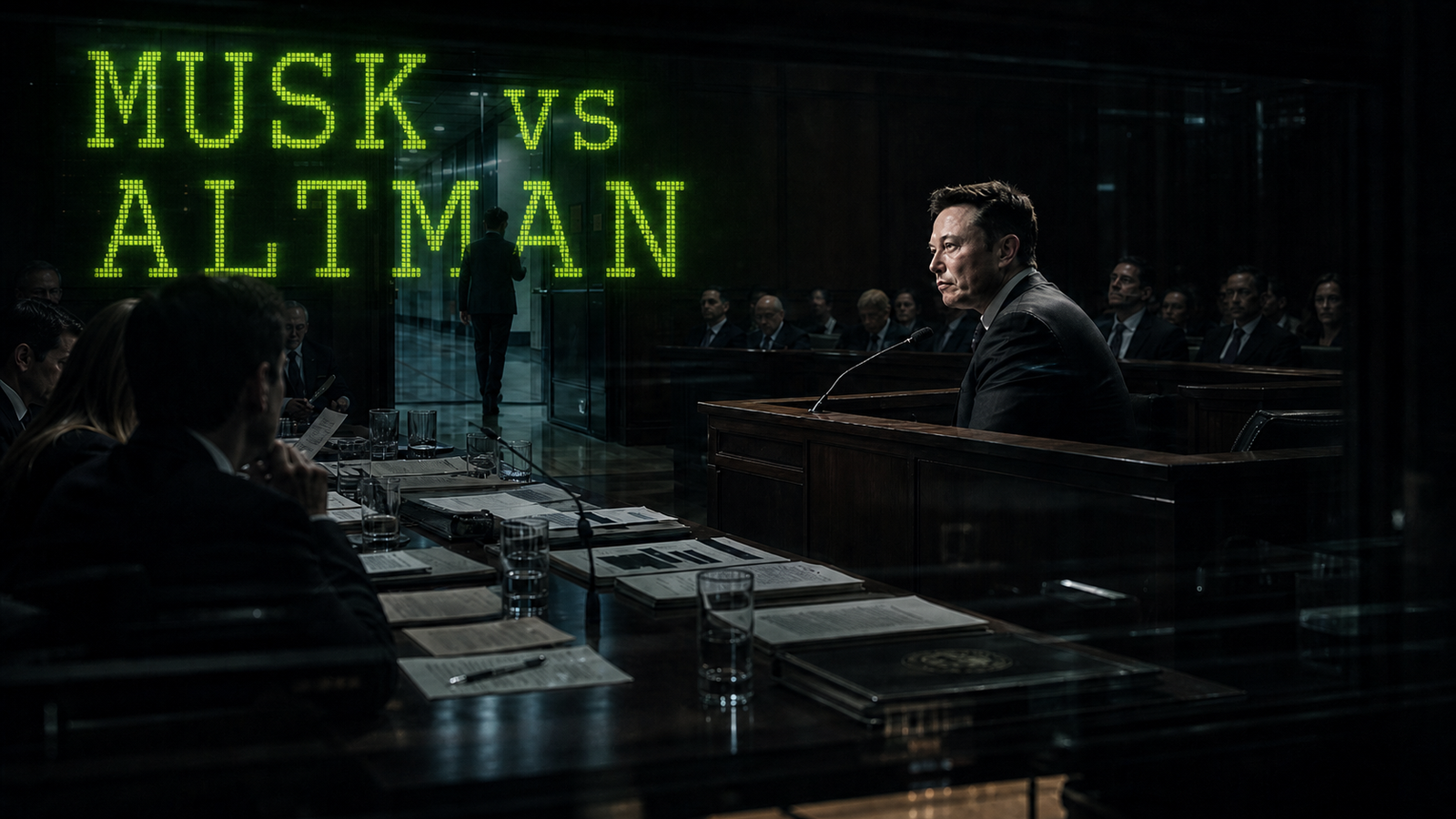
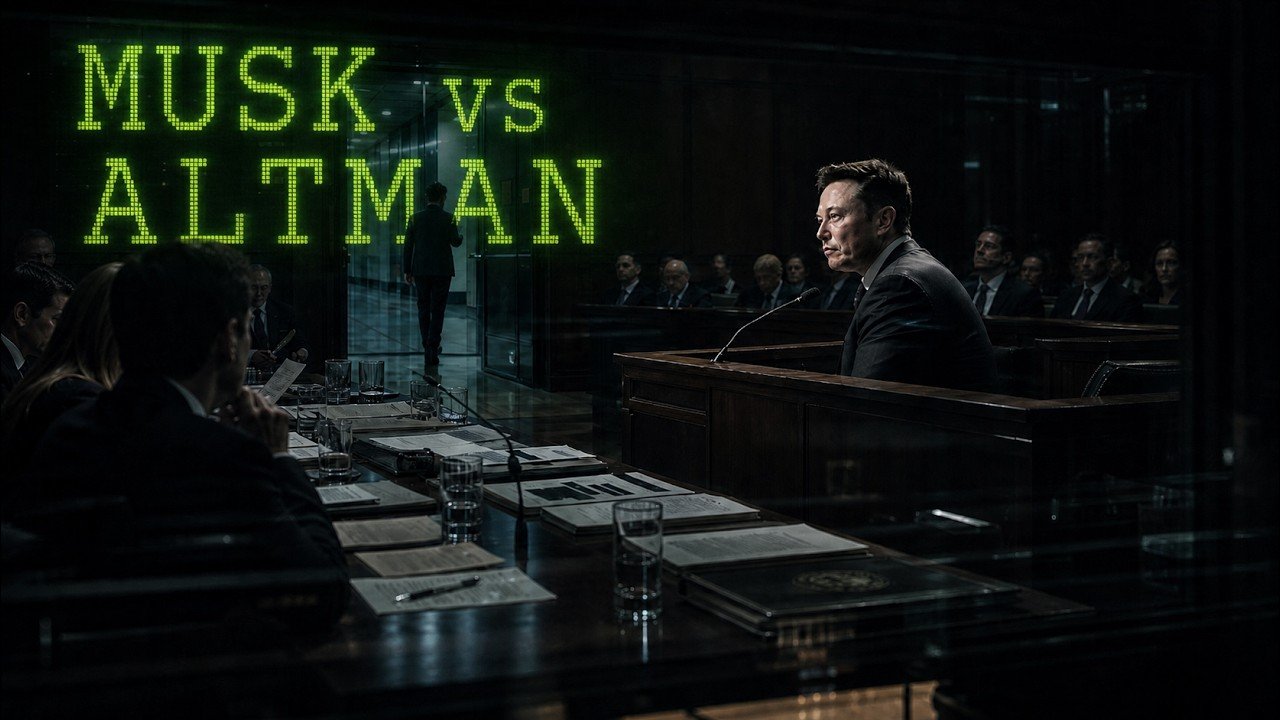
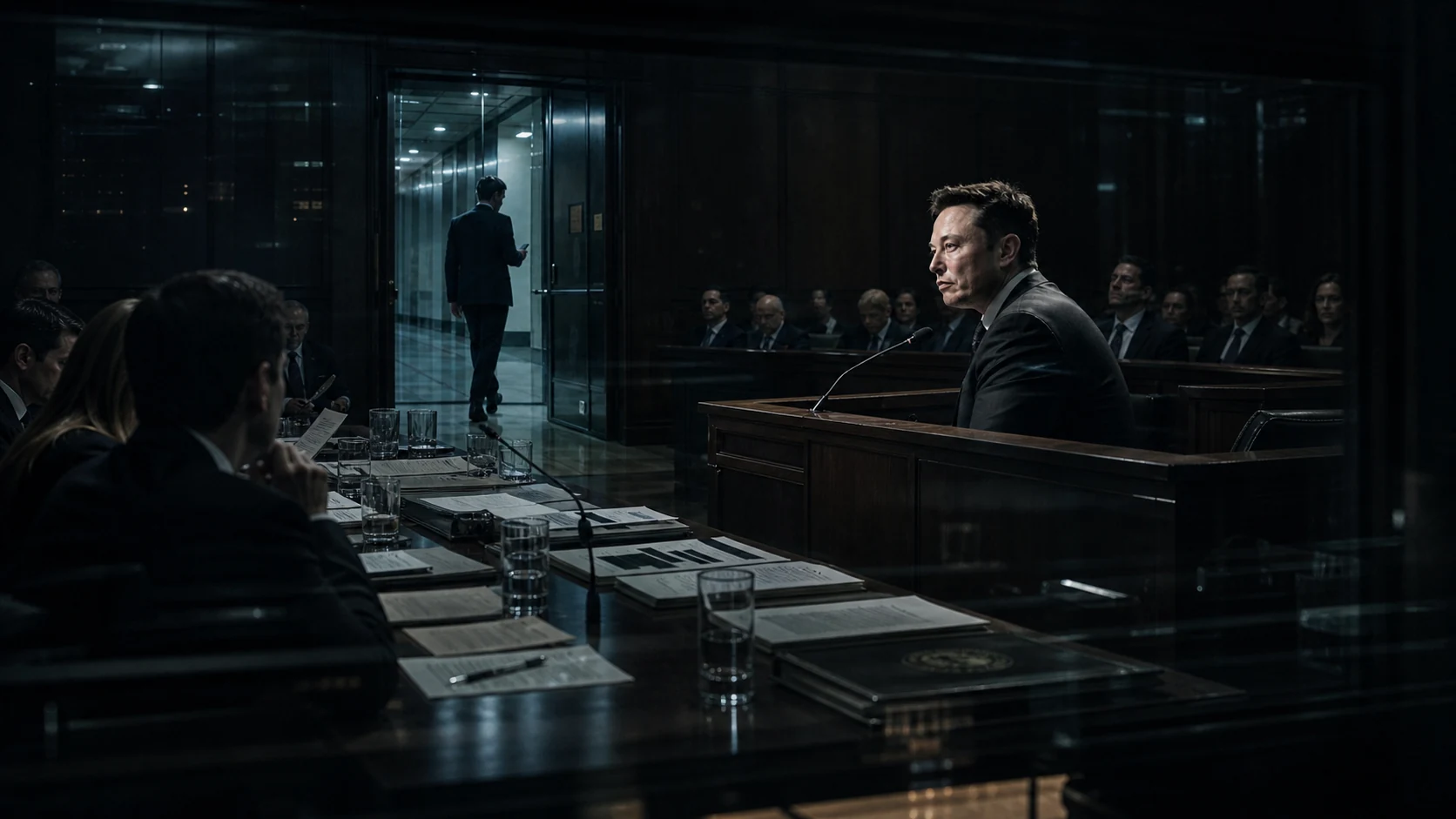
The trial opened on April 28, 2026, with Judge Yvonne Gonzalez Rogers summoning Musk’s lawyers before the jurors even entered, asking them to control their client. The night before, Musk had posted on X, calling Altman “Scam Altman” and accusing him of stealing a charity. Altman was in the courtroom that morning — writing on his phone. By the time Musk took the witness stand in the afternoon, Altman had already left the building. That geometry — Musk testifying, Altman gone — defined the entire three weeks that followed.
Musk told the jury he had come up with the idea, the name, recruited the key people, and provided the initial funding. He said he could have founded OpenAI as a for-profit company and chose not to. He waived any personal financial benefit — up to $134 billion in potential damages would go to OpenAI’s nonprofit arm, not to him. His ask: the removal of Altman and Brockman, and the unwinding of the for-profit conversion. He framed it in a single sentence: “If we make it acceptable to loot a charity, the entire foundation of charity in America will be destroyed.” This was, in essence, the second act of a dispute already covered in our earlier piece on OpenAI’s nonprofit empire and its for-profit pivot.
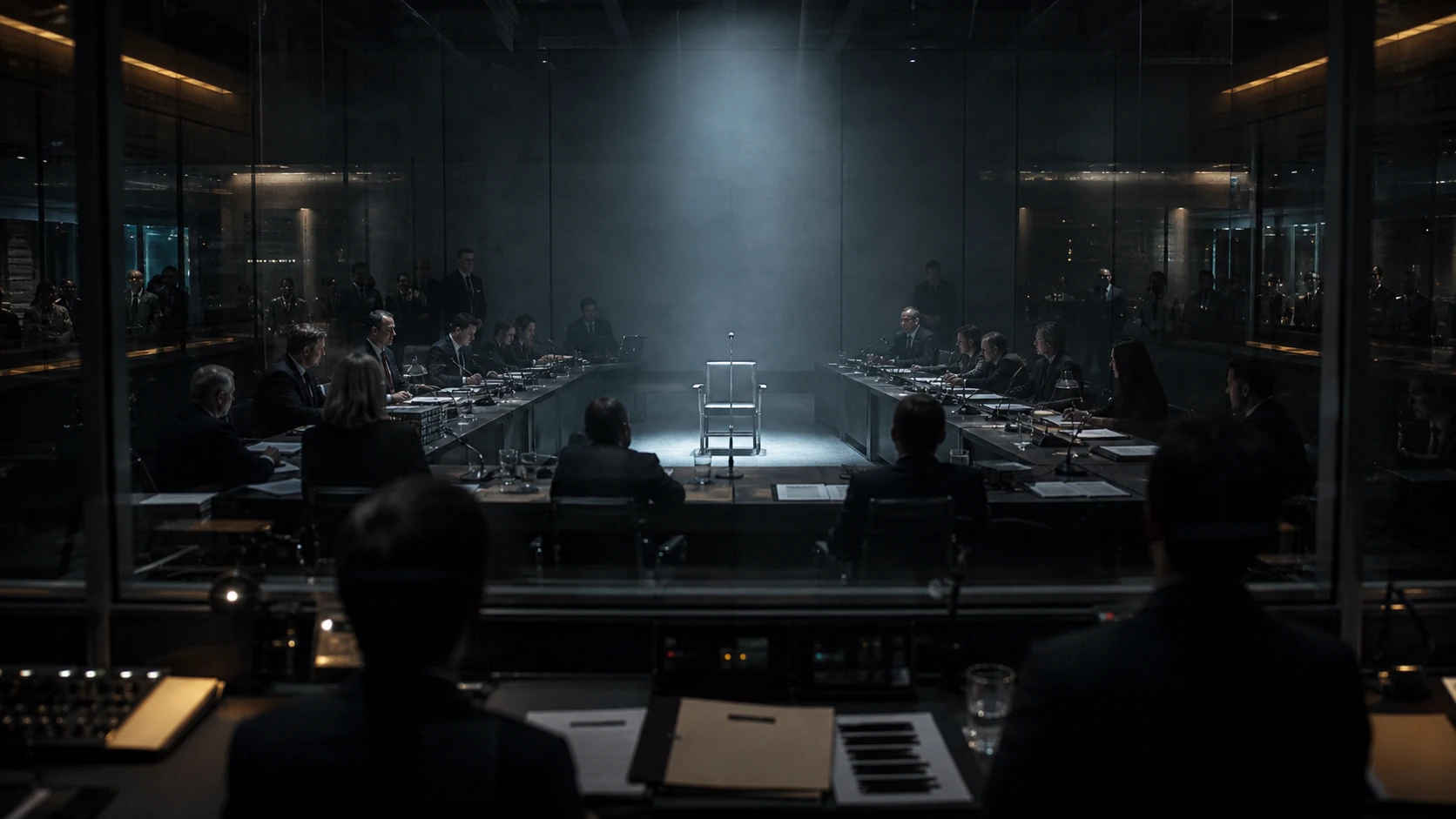
The Verdict: Ninety Minutes
May 18, 2026, 10:23 AM Pacific. Courtroom deputy Edwin Cuenco handed Judge Gonzalez Rogers a note. She declared: “We have a verdict.” The jury had started deliberations at 8:30 AM. The nine-member advisory jury found unanimously that Musk had waited too long to bring his lawsuit — the three-year statute of limitations had expired. Musk was aware of the behavior he cited as early as 2021. He filed suit only in 2024, after founding xAI, his own competing AI laboratory.
Judge Rogers adopted the verdict immediately. “I think there’s a substantial amount of evidence to support the jury’s finding,” she said. All claims against Altman, Brockman, OpenAI, and Microsoft were dismissed. The claim against Microsoft — for allegedly aiding and abetting the breach — was also thrown out on the same grounds. Lawyers for OpenAI and Microsoft exchanged hugs outside the courthouse. Neither Musk nor Altman was present to hear the verdict.
OpenAI’s lead attorney William Savitt, outside the courthouse: “The finding of the jury confirms that what this lawsuit was was a hypocritical attempt to sabotage a competitor and to overcome a long history of very bad predictions about what OpenAI has been and will become.”
Musk, on X, hours later: “The judge and jury never actually ruled on the merits of the case, just on a calendar technicality. There is no question to anyone following the case in detail that Altman and Brockman did in fact enrich themselves by stealing a charity.” An appeal to the 9th Circuit was announced. His lead attorney Marc Toberoff: “I can sum it up in one word: appeal.” Whether the 9th Circuit will agree to reconsider the statute-of-limitations ruling — and whether the merits will ever be adjudicated — remains open.
“I cannot believe we committed to the nonprofit if three months later we are doing a b-corp — then it was a lie.”
Exhibit 43, Greg Brockman’s personal diary, November 2017. The evidence that Judge Gonzalez Rogers had called “substantial” in January — enough to survive dismissal motions and force a jury trial — was never adjudicated on the merits. The statute of limitations swallowed it whole. The diary remains evidence of something. The court has not decided what. We had tracked the earlier procedural stages of the lawsuit over control of OpenAI before the case reached trial.
What the Trial Revealed
The three weeks of testimony produced more information than the verdict resolved. Hundreds of pages of private emails, text messages, and internal meeting notes entered the public record. Brockman’s diary, the founding conversations, the 2023 board coup and its reversal, Satya Nadella’s testimony on Microsoft’s role, the texts between Musk and Mark Zuckerberg discussing a joint bid to buy OpenAI — all of it became part of the legal record without generating a verdict on the underlying conduct.
OpenAI’s lawyers successfully built a second, parallel narrative: Musk himself had floated for-profit structures during his time on the board. He had pushed at various points for OpenAI to merge with Tesla or fold into his own companies. He left in 2018, founded xAI in 2023, and filed his lawsuit in 2024 — a sequence the jury found dispositive. The verdict does not answer whether Altman and Brockman breached their fiduciary duty. It answers a simpler question: Musk took too long to ask.
Sam Altman: The Man Who Cannot Be Removed
The conventional narrative on Sam Altman is that he survived a board coup. The more accurate reading is that he survived a board coup and emerged with more power than he had before. In November 2023, OpenAI’s board — the body legally charged with ensuring the mission of safe AI for all humanity — removed him. The stated grounds were serious: systematic dishonesty, withholding information, active misrepresentation. Former board member Helen Toner later testified that Altman had “for years made it very difficult for the board to do its job.” The removal lasted five days. All 800 employees threatened to resign. The old board was dissolved. Altman returned. The board was restructured with people who would not remove him again.
What the trial confirmed, inadvertently, is that the institutional architecture around Altman is now essentially removal-proof. The nonprofit board that still nominally oversees OpenAI has been rebuilt in his image. The for-profit arm — the entity that controls product, revenue, and the Pentagon contract — answers to a different structure. Musk’s original lawsuit sought to return power to the nonprofit board. The verdict means that question will not be answered in Oakland.
Up from near zero at founding in 2015.
Altman holds equity in the for-profit arm.
IPO targeted for Q4 2026. That equity
was at the center of Musk’s “unjust enrichment” claim.
The jury never ruled on it.
The Pentagon contract, signed in February 2026, is the cleanest demonstration of how Altman’s power actually works. Anthropic, OpenAI’s most direct ethical rival, refused a Defense Department contract because it contained no explicit prohibition on use for mass domestic surveillance or autonomous weapons. The Pentagon labeled Anthropic a “supply chain risk” — an unprecedented designation — and within hours, Altman announced a deal with the same department. He later admitted the timing was “rushed” and that the optics “don’t look good.” But the contract was signed. The admission of bad optics cost nothing. The contract remained. The maneuver fits a wider pattern of technocapitalism converging with state surveillance infrastructure, where private AI labs and defense agencies increasingly share incentives rather than friction.
This is Altman’s operational signature: move fast, acknowledge the friction, don’t reverse. The candor is strategic. It absorbs criticism without generating accountability. Saying “we rushed it” is not the same as undoing it. Anthropic’s Claude overtook ChatGPT in the App Store during the backlash, but OpenAI’s classified-network access to the Pentagon did not change. The market punished the optics for a week. The structural advantage was permanent.
“What this lawsuit was, was a hypocritical attempt to sabotage a competitor who can’t compete in the marketplace.”
OpenAI attorney William Savitt, May 18, 2026. The framing matters: Savitt was not just describing Musk’s motivation. He was offering the jury — and the public — a complete theory of the trial. Musk didn’t sue to protect charity. He sued because he was losing the AI race. The verdict validates that framing legally. Whether it is historically accurate is a different question — and one that will be answered, if at all, in a very different forum.
The Trial as Coronation
There is a detail worth sitting with. When Musk took the witness stand on April 28, Altman had already left the courthouse. Not because he was absent from the trial — he testified during the weeks that followed, in a courtroom that received him as CEO of a company valued at $852 billion. He left during the opening day because he did not need to watch Musk testify. His lawyers were there. His narrative was already set. The outcome was already, in some structural sense, determined by the statute of limitations Musk’s own legal team had missed — or chose to ignore when filing in 2024 rather than 2021.
The verdict was not a surprise to people who understood the legal mechanics. What it produced, politically and symbolically, was something more significant: a federal court’s official closure of the most serious public challenge to Altman’s authority. The California attorney general’s parallel investigation into OpenAI’s nonprofit conversion continues. The 9th Circuit appeal will take years. But the Oakland trial — the event that had occupied three weeks of the national conversation, that had produced Brockman’s diary and Musk’s testimony and Satya Nadella on the stand — ended with Altman legally untouched. The coronation was accidental. But it was complete.
Elon Musk and the Convergence of Pressures
The narrative of Musk as the most powerful man in the world has been repeated so often it has become a kind of furniture — present in every room, no longer examined. The trial’s outcome is an opportunity to examine it. What the past eighteen months reveal is not a man wielding unlimited power. It is a man managing, simultaneously, more points of financial and political pressure than any single entity can absorb without cost.
Tesla. First annual revenue decline in 2025 — a 3% drop, the first on record. Vehicle deliveries fell 16% year-over-year in early 2026. The stock entered 2026 down 6% year-to-date. BYD took the global EV crown. Robotaxi deployment, promised for 2025, has not materialized at scale. The company is pivoting from cars to autonomous systems and humanoid robots — both real bets, neither generating material revenue yet. Musk’s European political activity, and the DOGE controversy, produced measurable sales damage in Germany, France, and the UK. Tesla investors are not abstract about this: they sued over the $2 billion Tesla invested in xAI.
xAI. The company Musk founded in 2023 — the direct competitor to OpenAI — has been hemorrhaging talent since early 2026. Of the twelve co-founders, only two remain. Musk himself admitted publicly that xAI was “not built right,” weeks after Tesla had invested $2 billion in it and days after SpaceX acquired it. According to independent benchmarks, xAI is significantly behind Google, OpenAI, and Anthropic in both performance and cost efficiency. The SpaceX acquisition gave xAI access to SpaceX’s profitable operations to fund its AI ambitions, but the more likely goal is to give xAI investors an exit through SpaceX’s planned IPO — scheduled for June 2026 at a target valuation of $1.75 trillion.
DOGE and the political rupture. Musk’s tenure at the Department of Government Efficiency ended on May 30, 2025, when his 130-day limit as a special government employee expired. The publicly stated reasons were procedural. The operational context was more complex: Tesla investors were applying sustained pressure over the business damage from his political visibility; Republican members of Congress were complaining that town halls were being dominated by questions about a man “who is never going to be on the ballot”; and Musk had publicly broken with Trump over the “One Big Beautiful Bill,” calling it fiscally inconsistent with DOGE’s stated goals. The bill passed the House by a single vote. Musk deleted the post criticizing it. The rupture was real, if brief. “I probably did spend a bit too much time on politics,” Musk told Ars Technica after leaving. DOGE claimed $214 billion in savings; independent reporting found the figure to be inflated, restated, or derived from a fundamental misunderstanding of how the federal budget works.
The structural position. Musk simultaneously manages Tesla, SpaceX (now merged with xAI), X, Neuralink, and The Boring Company. Each entity has its own capital structure, investor base, and competitive pressure. The SpaceX-xAI merger creates a new complication: the IPO now planned for June 2026 would raise between $40 and $75 billion, the largest in market history if it proceeds. But it also creates competition for capital within the “Muskonomy” — Tesla shares fell 8% over five trading days following the SpaceX IPO announcement, as investors who had used Tesla as a proxy for Musk’s ambitions discovered they no longer needed to. The premium that attached to Tesla because it was the only publicly traded Musk vehicle evaporated the moment SpaceX announced its listing.
The framing of Musk as a man under attack from “other groups” requires precision. There is no single coordinated campaign — what exists is a convergence of structurally incompatible positions. Sovereign wealth funds and institutional investors in Tesla have different interests than venture capital investors in xAI. The Pentagon has different interests than the European regulators investigating Grok’s deepfakes. The Republican establishment that wanted distance from Musk’s polarizing brand has different interests than the Trump loyalists who celebrated his DOGE appointment. None of these groups needed to coordinate to create pressure. The pressure is structural. It emerges from the mathematics of managing too many leveraged positions simultaneously, in too many different political economies, at the same time. It is the same structural logic behind programmed inequality and the concentration of tech wealth: a handful of interlocking valuations that rise and fall together, regardless of any single actor’s intent.
Tesla, SpaceX-xAI (merged), X, Neuralink, The Boring Company, Starlink.
Each with distinct investor bases, regulatory exposures,
and competitive dynamics. The SpaceX-xAI IPO creates
direct capital competition with Tesla for the first time.
The Tongues That Stop at the Evidence
There is a specific intellectual honesty required when discussing Musk that most commentary avoids. The same media ecosystem that described him as the world’s most powerful man — and was not wrong — has difficulty accounting for the evidence that his power has limits, costs, and internal contradictions. The Oakland verdict is one data point. The Tesla decline is another. DOGE’s departure is a third. xAI’s talent exodus is a fourth. None of these, individually, represents a decisive defeat. Together, they describe a man who attempted to open too many fronts at once, and who is now managing the consequences of each one.
The “dark war” framing — the sense that other groups are coordinating against Musk’s capital — is not without basis. Institutional investors in Tesla have genuine interests in limiting Musk’s political exposure. European governments have genuine interests in regulating his platforms. Altman has genuine interests in preventing the OpenAI nonprofit question from being re-litigated. But “genuine interests” is not the same as a coordinated campaign. What Musk faces is not a conspiracy. It is the normal operation of power against power — the resistance that accumulates when any single actor attempts to dominate too many systems simultaneously.
The Oakland verdict is the most visible crystallization of this dynamic. Musk had the evidence — Brockman’s diary, the founding promises, the 2019 conversion. He had a judge who had found “substantial evidence” to survive dismissal. He had three weeks of testimony. What he did not have was time: the three years the statute of limitations required had passed before he filed. Whether that was a strategic error, a deliberate delay, or a bet that the merits would overcome the procedural barrier is something only his legal team knows. What the jury decided, in ninety minutes, is that it does not matter.
The Original Promise: From Stallman to Altman
To understand what OpenAI broke, we have to understand what it had promised. And to understand what it had promised, we have to go back long before 2015. Richard Stallman, a programmer at the MIT AI Laboratory, refused to sign a nondisclosure agreement for the code of a Xerox printer in 1983. That refusal became the manifesto of a movement. In 1985, Stallman founded the Free Software Foundation. In 1989, he published the GNU General Public License. The principle is simple in its radicalism: software must be available to study, modify, and redistribute. Not as a commercial concession. As a right.
“Free software is a matter of freedom, not price. Think of ‘free’ as in ‘free speech,’ not as in ‘free beer.'”
- 1983 Stallman launches the GNU Project. First formulation of the four essential freedoms: to use, study, modify, and redistribute.
- 1989 First version of the GNU GPL. Copyleft becomes a legal mechanism, not an abstract principle.
- 1998 The Open Source Initiative is born. “Open source” replaces “free software” in corporate language. The ideological fracture that has never closed.
- 2015 OpenAI is founded as a nonprofit. The name borrows thirty years of moral authority from the free software movement. No code is released under any OSI-approved license.
- 2019 OpenAI does not release GPT-2 in full, citing safety concerns. The name begins to become officially ironic.
- 2024 The OSI publishes its definition of open-source AI. No frontier model satisfies it. The term is now a regulatory category worth billions in exemptions.
- May 18, 2026 Federal jury in Oakland dismisses all claims against OpenAI. The nonprofit conversion is not adjudicated. The question of what “open” obligated OpenAI to do remains legally unanswered.
The Definition of Open as a Regulatory Battlefield
Google Gemini — proprietary, API-only variants.
Meta LLaMA 3 — weights available, training data undisclosed, custom license not OSI-approved.
Mistral 7B — Apache 2.0 for the base model; Mistral Large proprietary.
DeepSeek R1 — MIT for weights; infrastructure and training data undisclosed.
Anthropic Claude — proprietary, no access to weights. Pentagon contract refused. Labeled “supply chain risk.”
OSI-compliant models, under the October 2024 definition: zero among frontier models.
Companies with Pentagon classified-network access: one. OpenAI.
What the verdict does not resolve: the Charitable Trust Doctrine.
The Oakland jury ruled on timing, not substance. The underlying question — whether OpenAI’s conversion from nonprofit to for-profit constitutes a breach of the charitable fiduciary duty owed to its donors and to the State of California — was never adjudicated. The California Attorney General’s separate investigation into the conversion continues independently of the trial’s outcome and is not bound by the statute-of-limitations ruling.
The Blue Cross precedent remains active. When Blue Cross of California transferred its assets to a for-profit subsidiary in the 1990s, the California AG intervened and forced the transfer of more than $3 billion in shares to two independent foundations. That mechanism — the charitable trust doctrine — has not been applied or rejected in the OpenAI context. The trial ended before the court reached it.
The structural question for the IPO. OpenAI has announced a target IPO for Q4 2026. The for-profit entity going public is the same entity whose conversion is under investigation by the California AG. If the AG pursues a Blue Cross-style remedy, the IPO timeline becomes complicated. If the AG accepts the conversion as valid, every future AI nonprofit has a precedent for a similar transformation. In both cases, the definition of “open” stops being a technical question and becomes a governance one — and the resolution will not come from a courtroom in Oakland, but from the California Department of Justice.
- CNBC — Musk slams Altman trial verdict as a ‘technicality,’ vows to appeal
- NBC News — Elon Musk loses OpenAI trial against Sam Altman: Jury tosses suit
- NPR — Jury dismisses all claims in Elon Musk’s lawsuit against OpenAI CEO Sam Altman
- CNN — Musk loses case against OpenAI
- TechCrunch — OpenAI’s Sam Altman announces Pentagon deal with ‘technical safeguards’
- Fortune — Altman admits Pentagon deal optics “don’t look good”
- Electrek — SpaceX bails out xAI in mega-deal
- Electrek — Musk admits xAI ‘not built right’
- CNBC — ‘Muskonomy’ shakeup: SpaceX valuation approaches Tesla’s after merger with xAI
- Time — What Musk’s Exit Means for DOGE and the Trump Administration
- Time — DOGE Disbanded: Elon Musk’s Cost-Cutting Project Quietly Ended
- OSI — Open Source AI Definition, October 2024
Trial Timeline — Complete
- Apr 28, 2026 Opening statements. Musk testifies as first witness. Altman leaves before testimony begins.
- Apr 29 – May 16 Three weeks of testimony: Altman, Brockman, Satya Nadella, Ilya Sutskever. Mira Murati by deposition. Zilis reveals romantic relationship with Musk, details on conduit role. Zuckerberg texts on joint OpenAI bid entered into evidence.
- May 18, 2026 VERDICT — Unanimous. All claims dismissed. Statute of limitations. Deliberations: 90 minutes. Judge Rogers adopts immediately. Musk not present. Altman not present.
- May 18, 2026 Musk on X: “calendar technicality.” Appeal to 9th Circuit announced by attorney Marc Toberoff.
- Ongoing California AG investigation into OpenAI nonprofit conversion continues independently. OpenAI IPO targeted Q4 2026.